 SGNUTRI



Ricerca prodotto
Allulose and Monk Fruit: How the Blend Works
Two packages can both say “monk fruit” on the front, while one lists allulose and the other lists erythritol. You might use them to make a drink equally sweet and still get different results when you bake with them. To understand an allulose and monk fruit blend, separate the sweetness from what the ingredients add to the recipe.
Monk fruit extract boosts sweetness, while allulose adds solids
Allulose is a monosaccharide about 70% as sweet as sucrose. It adds sweetness, bulk, and soluble solids to a recipe. Monk fruit extract can supplement the sweetness at a much lower inclusion rate. If you reduce the allulose and bring the sweetness back up with monk fruit extract, the solids you removed are still missing. When those solids help give the food its texture, matching the sweetness addresses only part of the substitution.
What the ingredient list tells you
A product sold as a monk fruit sweetener may pair the extract with allulose, erythritol, dextrose, or another carrier. A product sold as an allulose sweetener can also be a single ingredient or a blend. When allulose provides bulk and solids in a monk fruit sweetener, its presence in the blend does not imply that it was extracted from monk fruit.
MV50 monk fruit extract, for example, is a pale-yellow to white powder with a mogroside V content of 48%–52%. That percentage describes the extract itself. It gives neither the proportion of extract in a blend nor its sweetness relative to sucrose.
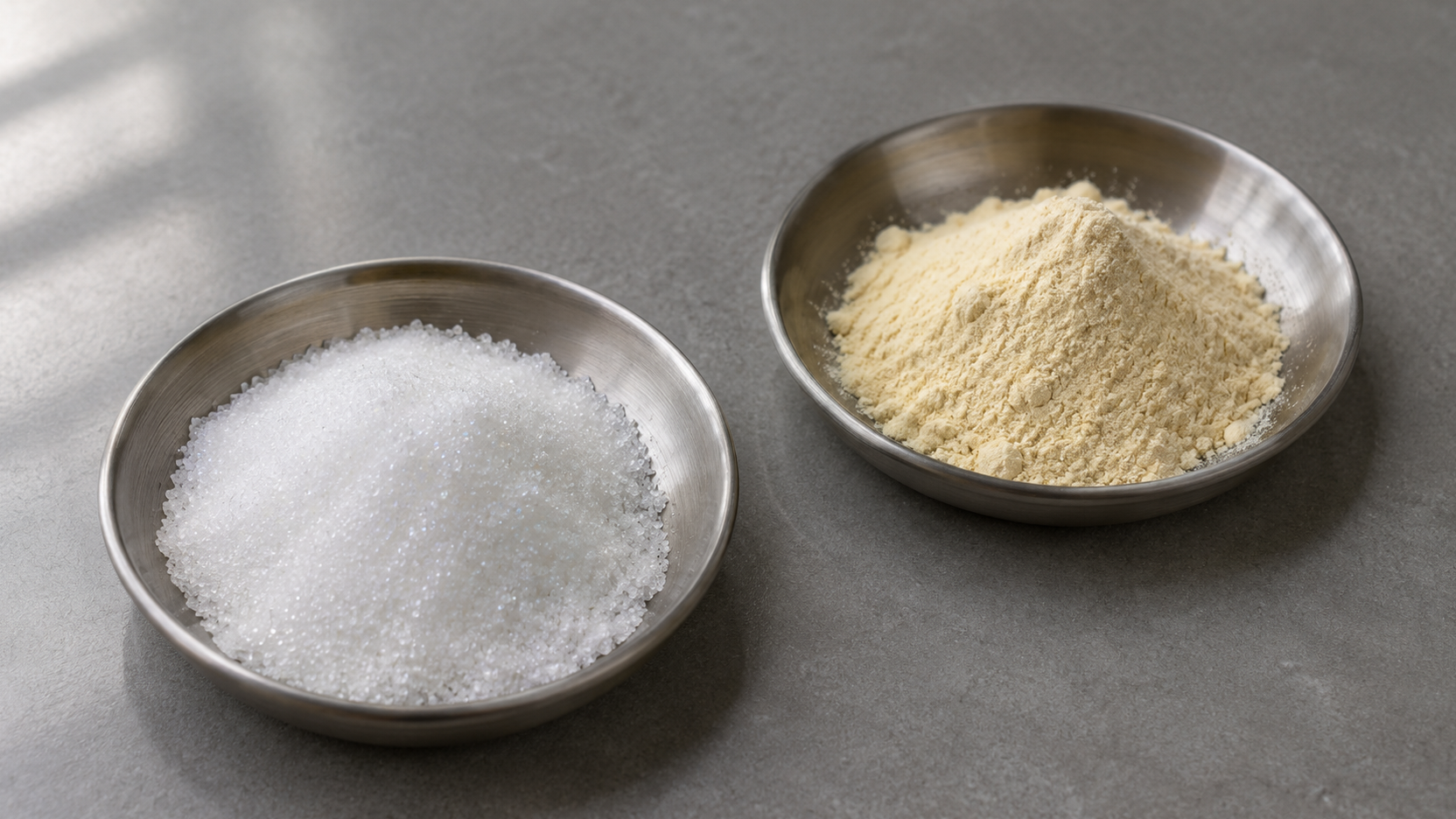
The ingredient list can tell you whether a product contains allulose, but the name of the blend does not specify a standard ingredient ratio. There is no universal substitution ratio either. Compare single ingredients and finished blends separately. Read the stated sweetness and actual ingredient content alongside the serving amount, and check whether the directions use grams or teaspoons. Particle size, bulk density, and how the spoon is filled all affect how much a teaspoon weighs. A spoon-for-spoon conversion applies only to the product it was written for. Changes in concentration, temperature, acidity, or the food itself can also affect perceived sweetness and aftertaste.
What changes in a recipe when sweetness stays the same
In baking, allulose can contribute to browning because it is a reducing sugar. It can also affect moisture retention and the finished texture. If you are switching from a monk fruit and erythritol blend, consider the cooling sensation and crystallization associated with erythritol. In frozen desserts, allulose can also affect the freezing point.
The form of the ingredient affects the substitution as well. When replacing crystalline allulose with syrup, account separately for the water and solids the syrup adds to the recipe.
Il precedente: Allulose and Microbiome: What Human Evidence ShowsIl prossimo: Allulose and Monk Fruit Blend: What Each Ingredient Does
Raccomandazioni correlate
-

Dovrei assumere prebiotici o probiotici?
1609Confusione su prebiotici e probiotici. Probiotici? Scoprite perché una dieta equilibrata è fondamentale e quando usare gli integratori per una salute intestinale ottimale.
Visualizza i dettagli -
Differenza tra fibra solubile e insolubile
1928Imparate a conoscere la differenza tra la fibra solubile e quella insolubile nell'intestino. La solubile controlla la fame; l'insolubile mantiene la regolarità.
Visualizza i dettagli -
Che cos'è il destrosio anidro
2433Che cos'è il destrosio anidro? Una fonte di glucosio pura e poco umida per l'energia rapida, il recupero della forma fisica e l'uso medico.
Visualizza i dettagli -
La fibra solubile è migliore di quella insolubile?
1662Scoprite le differenze tra fibre solubili e insolubili e quale tipo è il migliore per i vostri obiettivi specifici di salute.
Visualizza i dettagli