SGNUTRI


Ricerca prodotto
La destrina resistente aumenta la glicemia?
La risposta è no: la destrina resistente non aumenta la glicemia. È diversa dai normali carboidrati che si trasformano immediatamente in glucosio dopo aver mangiato. Si tratta infatti di una sorta di fibra alimentare idrosolubile elaborata con un processo speciale, che non può essere digerita dallo stomaco e dall'intestino tenue dell'uomo. Poiché il corpo non può assorbirla, ha un indice glicemico (IG) quasi nullo e non stimolerà mai la secrezione di insulina, né tanto meno causerà un pericoloso picco di zuccheri nel sangue. È completamente diversa dalla maltodestrina. Sia che stiate monitorando rigorosamente il vostro glucometro (CGM) per controllare il diabete di tipo 2, sia che stiate seguendo una dieta chetogenica con un basso apporto di carboidrati, potete consumare senza problemi la destrina resistente ai farmaci.
Meccanismi digestivi: Perché non si trasforma in glucosio
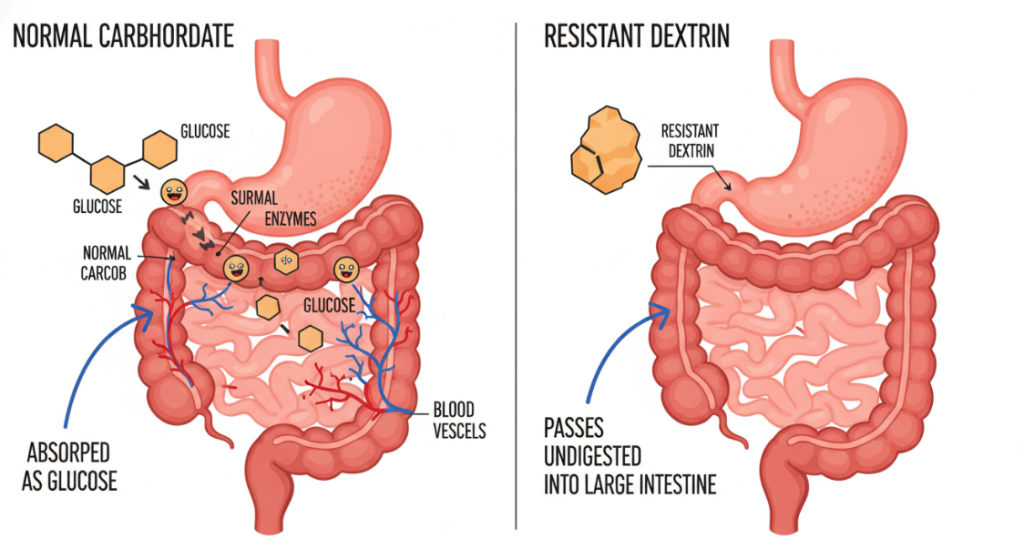
Dobbiamo innanzitutto capire come l'organismo tratta i carboidrati. I carboidrati ordinari che si mangiano di solito, una volta entrati nello stomaco, gli enzimi digestivi dello stomaco e dell'intestino tenue si precipitano, li smontano rapidamente in monosaccaridi (cioè glucosio) e poi finiscono direttamente nel sangue. Ma la destrina resistente è un tipo di fibra alimentare idrosolubile appositamente “modificata”, la cui disposizione dei legami chimici evita perfettamente il riconoscimento da parte degli enzimi digestivi umani: i nostri enzimi digestivi non possono farci nulla. Il glucosio passa intatto attraverso lo stomaco e l'intestino tenue. Poiché anche un po“ di glucosio non è stato smontato in questo tratto digestivo, naturalmente non c'è zucchero da mescolare nel sangue. Questo livello fisiologico di ”deviazione" è la causa principale della misurazione della glicemia.
Indice glicemico (IG) vicino allo zero e stabilità insulinica
Se avete controllato gli zuccheri, non siete estranei all'indice glicemico (IG). Questa misura misura il grado di innalzamento degli zuccheri nel sangue da parte di un alimento veloce. In realtà, la logica è molto semplice. Poiché il corpo umano non può assorbire la destrina resistente, il suo valore IG si avvicina naturalmente a zero all'infinito. Quando si mangia questo alimento a IG quasi zero, si interrompe direttamente il tipo di reazione a catena negativa che i normali carboidrati spesso innescano. Non c'è glucosio nel sangue e il risultato è..:
- Nessun picco glicemico: La curva glicemica sarà una linea retta rassicurante e regolare.
- Nessun picco insulinico: Il pancreas può andare in “vacanza” in questo periodo e non deve essere costretto a secernere grandi quantità di insulina per far fronte all'eccesso di zuccheri.
La destrina resistente è un ingrediente sicuro, estremamente amico della salute del metabolismo ed efficace nel prevenire queste violente fluttuazioni e il conseguente crollo dell'ipoglicemia.
All'avanguardia nella nutrizione
Fibra solubile
La fibra solubile è un ingrediente dietetico altamente stabile e indigeribile che favorisce il controllo del peso aumentando il senso di sazietà e riducendo l'assunzione di cibo. Versatile nelle applicazioni, è ampiamente utilizzata per migliorare il profilo nutrizionale e la consistenza di alimenti, bevande e prodotti salutistici.
Fibra solubile
Prebiotico
Un prebiotico funziona come un fattore di proliferazione che viene selettivamente degradato e utilizzato dai batteri intestinali benefici, come ad esempio Bifidobatteri. Questo processo esercita un effetto positivo sulla salute generale dell'uomo, spesso accompagnato da vantaggi metabolici come il basso impatto calorico e le minime fluttuazioni di zucchero nel sangue, grazie alla loro straordinaria stabilità digestiva.
Prebiotico
Vitamine
Le vitamine sono micronutrienti organici essenziali, suddivisi in forme idrosolubili e liposolubili, che regolano processi fisiologici critici come il metabolismo, l'immunità e la coagulazione. A causa della loro sensibilità alla luce, al calore e all'umidità,
Vitamine
Destrina resistente VS Maltodestrina
- Maltodestrina: Si tratta di un carboidrato altamente trasformato ed estremamente digeribile. Ha un indice glicemico spaventosamente alto (di solito tra 85 e 105, persino superiore a quello dello zucchero bianco di casa).
- Destrina resistente: La destrina viene lavorata con un processo specifico, la sua struttura originale viene modificata e si ottiene la proprietà di “anti-digestione”. Questo passaggio la trasforma direttamente da carboidrato semplice a fibra idrosolubile funzionale e non digeribile.
Non lasciatevi ingannare dai loro nomi simili. La maltodestrina è una bomba di zucchero nel sangue, mentre la destrina resistente è una cellulosa estremamente sicura e rispettosa degli zuccheri nel sangue.
Gestione del diabete di tipo 2 e scelta sicura della dieta chetogenica
Grazie alla sua capacità di stabilizzare gli zuccheri nel sangue, la destrina resistente è diventata l'ingrediente perfetto per molte persone con esigenze dietetiche rigorose.
Per gli utenti del CGM e gli amici dello zucchero di tipo 2
Se state gestendo il diabete di tipo 2 e fissate ogni giorno un glucometro ambulatoriale continuo (CGM), posso dirvi responsabilmente che l'assunzione di destrina resistente non farà suonare il vostro strumento come un allarme. Ciò significa che potete usarla per migliorare il sapore dei cibi e integrare le fibre alimentari senza il peso psicologico di un'impennata della glicemia.
Per chi pratica la dieta chetogenica
Gli amici che seguono la via chetogenica sanno tutti che, se si vuole rimanere in uno stato di chetosi, è fondamentale attenersi ai “carboidrati netti” (carboidrati totali meno fibra alimentare). Poiché la destrina resistente è completamente resistente alla digestione, nella classificazione nutrizionale è una fibra alimentare solubile in acqua al 100%, quindi la sua produzione netta di carbonio è pari a zero. Potete tranquillamente inserirla nella vostra dieta chetogenica. Questa sostanza non disturberà mai il calcolo dei macronutrienti e non vi farà entrare nello stato chetogenico.
Autore:Alex Carter
Salve, sono un nutrizionista registrato e uno specialista della salute metabolica. Nei miei anni di pratica clinica, ho aiutato innumerevoli pazienti a gestire in modo sicuro il diabete di tipo 2 e a ottimizzare il loro stile di vita keto-friendly. Sono specializzata nell'analisi delle fibre alimentari, dell'Indice Glicemico (IG) e dei dati del Monitoraggio Continuo del Glucosio (CGM).
Il precedente: La fibra solubile è migliore di quella insolubile?Il prossimo: La fibra solubile si scioglie in acqua
Raccomandazioni correlate
-

Come viene prodotto il dolcificante allulosio? Il vero processo svelato
44Commercial allulose is manufactured by extracting starch from crops like corn or cassava, converting that starch into liquid fructose, and introducing specific bio-enzymes (like D-psicose 3-epimerase) that biologically restructure the fructose mo...
Visualizza i dettagli -
Lattitolo monoidrato: Un'alternativa allo zucchero dal gusto pulito
1366Sgnutri fornisce granuli di lactitolo e di guscio di ispaghula per formulazioni di fibre sfuse in applicazioni alimentari e per la salute dell'apparato digerente.
Visualizza i dettagli -
La destrina resistente è amica del cheto
262La destrina resistente è keto? Scoprite il suo basso indice glicemico, l'impatto a zero carboidrati netti e i benefici per la salute dell'intestino nelle diete a basso contenuto di carboidrati.
Visualizza i dettagli -
I prebiotici sono fibre solubili o insolubili?
453La maggior parte dei prebiotici è classificata come fibra solubile. Scoprite perché sono un sottoinsieme funzionale distinto dalle fibre insolubili.
Visualizza i dettagli