 SGNUTRI


Ricerca prodotto
Allulose Comprar: How to Choose Allulose
When you see purchase expressions like allulose comprar, it’s important to note that the buyers may be different: finished ice cream, beverages, or syrups containing allulose, table sweeteners, and allulose ingredients used in food production are not the same type of purchase. They cannot be compared directly in a single price list.
Separate the procurement objects first
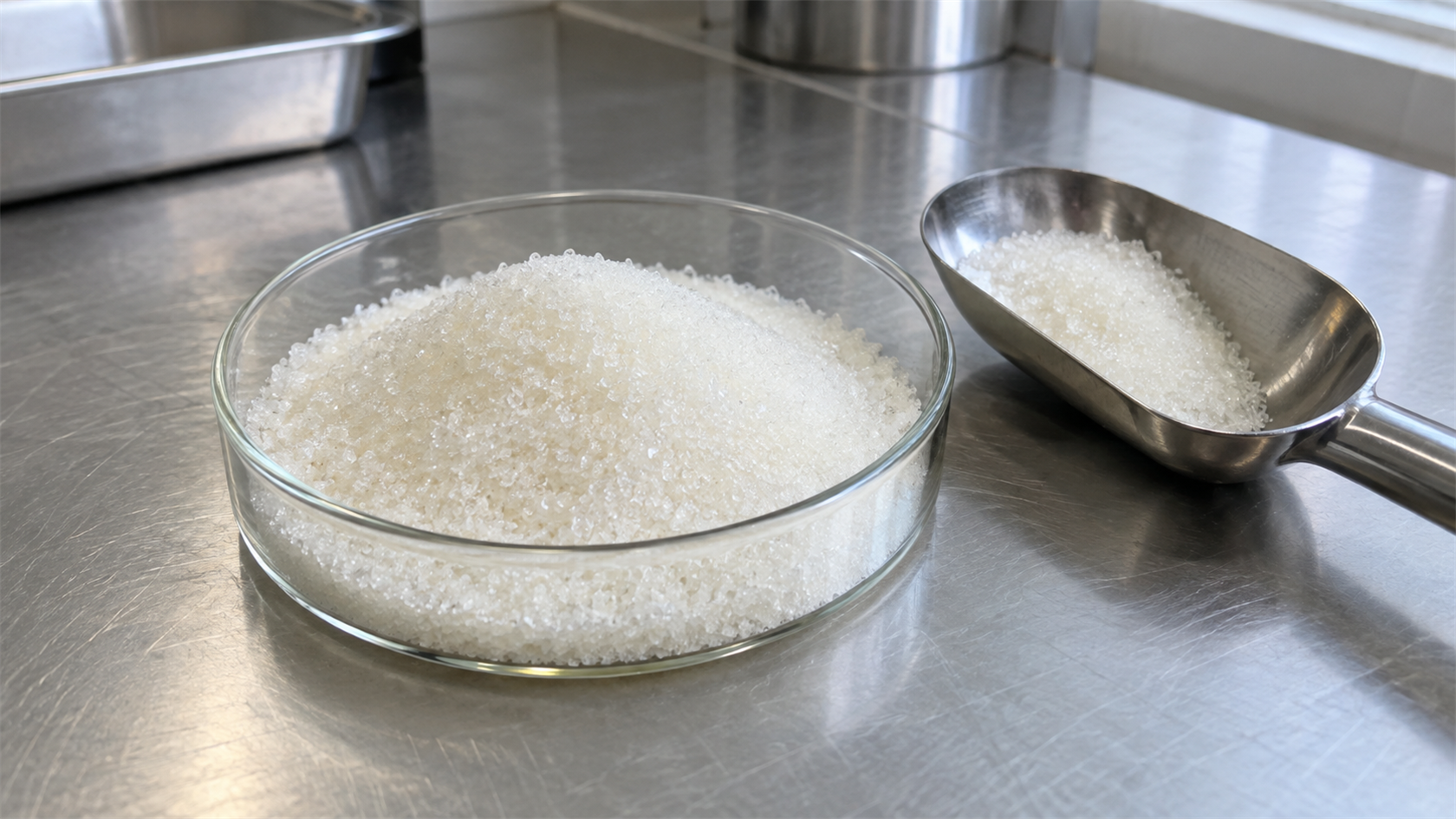
When pure allulose is required, the complete ingredient list should only list allulose. For compound products, the sweetness components and their uses should be considered separately, and the unit price of the compound product cannot be directly compared with the pure product. Available forms include liquid allulose syrup and crystalline allulose; the latter is used as a sweet ingredient in food development and as a sucrose alternative.
Baking, beverages, syrup-based recipes, and frozen desserts have different requirements for dissolution rate, graininess, moisture content, and handling methods. The same name does not mean that all forms are interchangeable. Before purchasing, consider the end use and desired form together, so you won’t just order by name.
Specifications determine whether the comparison is valid
The specifications of crystalline allulose can be as white or pale yellow crystalline particles or powder, odorless, and easily soluble in water; the dry basis content is not less than 98.5%, the weight loss during drying is not more than 1.0%, the ash content is not more than 0.1%, the pH is 3.0 to 7.0, and the protein and fat content are not more than 1.0%. This information is more accurate than the four words “allulose” in determining whether a product is the same subject of comparison. Particle size, packaging, and application still need to be matched with the formulation process; purity cannot be the only concern.
The retail price should be put back into the purchase terms
Consumer packaging can be purchased through the brand’s official website, food retailers, and e-commerce platforms. The seller and the platform performer may not be the same entity, and inventory, returns, delivery timeliness and price conditions will also be different; store inventory and delivery time vary with location and time, and a single page cannot represent long-term supply.
Taking the page price recorded on August 27, 2026 as an example, the translation price of 12 oz single-ingredient granular allulose is approximately US$23.49 to US$25.81 per kilogram; the translation prices of 5 lb and 10 lb products on the same retail platform are approximately US$15.87 and US$13.23 per kilogram, respectively. The translation prices for the 25 kg sample were US$15.96 and US$26.25, respectively. These figures only correspond to the specific products and price conditions at the time. Differences in brand, seller, ingredient composition, form, inventory, and transportation can all cause price differences, and large packages are not necessarily cheaper.
Retail price comparisons should be standardized in terms of net content, currency, taxes, shipping costs, subscription discounts, and delivery methods. After entering the bulk quotation, the product form, specifications, quantity, trade terms, delivery location, packaging and payment terms should also be placed under the same caliber; otherwise, different conditions should be compared instead of allulose itself.
When buying in bulk, you need to ask about the conditions outside the bag
Industrial procurement is typically completed through manufacturers, importers, food ingredient distributors, or specialized wholesale channels. To determine who the real manufacturer is, it is necessary to verify the actual production entity and production location; the functions of brand or technology holders, regional suppliers, importers and distributors are not the same, and the brand name on the sales page cannot prove the production relationship alone.
When inquiring in bulk, you should clearly state the product form, target content or purity, particle size, intended use, order quantity, packaging, target market, delivery location, expected delivery date, and whether samples are required. You should also confirm the minimum order quantity, tiered price, quotation validity period, currency, trade terms, freight, insurance, customs duties, taxes, and payment terms. In the publicly available supply example, a 25 kg bagged product may be available for single-bag purchase, or a minimum order quantity such as 500 kg may be set. Simply writing “allulose 25 kg” is insufficient to form a valid quote.
Il precedente: Allulose Condensed Milk: Formula, Texture and SafetyIl prossimo: Allulose Concerns: Tolerance, Symptoms, and Safety
Raccomandazioni correlate
-

Allulose Concerns: Tolerance, Symptoms, and Safety
75Explore allulose concerns, including digestive tolerance, symptom attribution, and limits of current safety evidence.
Visualizza i dettagli -
Lo sciroppo di maltitolo è senza glutine? Tutto quello che dovreste sapere
1425Scoprite se lo sciroppo di maltitolo è privo di glutine, quali sono i suoi usi come dolcificante e se è sicuro per le persone con sensibilità al glutine.
Visualizza i dettagli -
La carenza di vitamina b12 può essere un segno di cancro
1369Scoprite se la carenza di vitamina B12 può essere un segnale di cancro, le cause comuni, i sintomi e quando rivolgersi al medico.
Visualizza i dettagli -
Sweetener Xylitol: Choosing 20 Mesh or 100 Mesh
462Compare sweetener xylitol in 20 mesh and 100 mesh formats, with key specifications and batch checks.","alt":"White crystalline sweetener xylitol shown in food ingredient quality-control scenes.
Visualizza i dettagli